I’ve always been fond of William Blake, from poems like Tyger, Tyger and Jerusalem but also his dramatic, deity (or demon)-infused paintings. So even though I’d planned to visit this exhibition, as always, I left it to pretty much the final day before attending. I have visited the old Tate before via boat, which is very civilised and fairly quick (if infrequent), but in the cold weather and fairly pressed for time, I ubered there and taxied back.

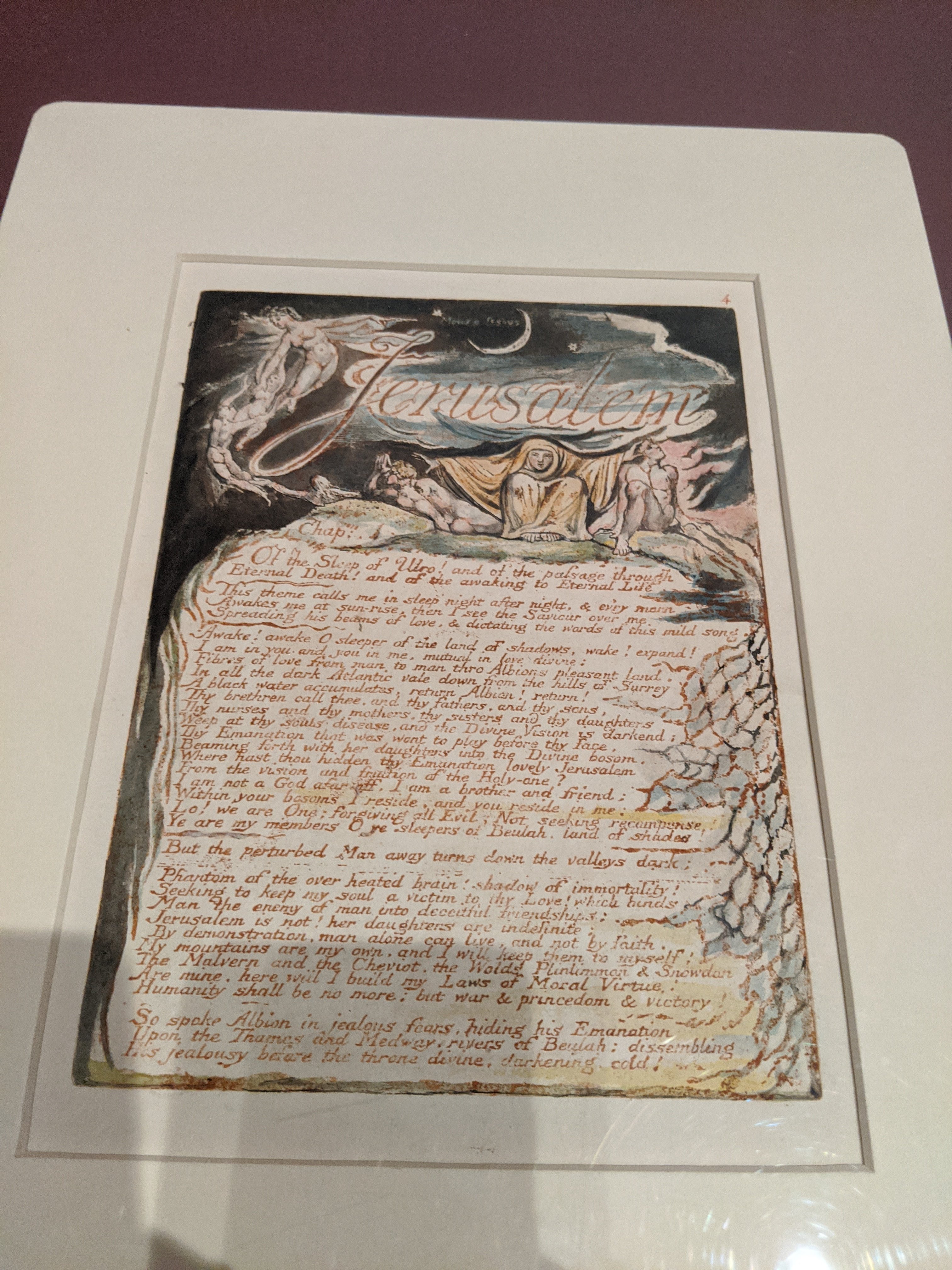
What I hadn’t realised about Blake before is he was an illustrator of stories, rather than a straight down the line painter. While some stories were pre-existing, many of them he created. The poem/hymn Jerusalem, for example, comes from the preface to a larger work, Milton, sort of a Paradise 3.
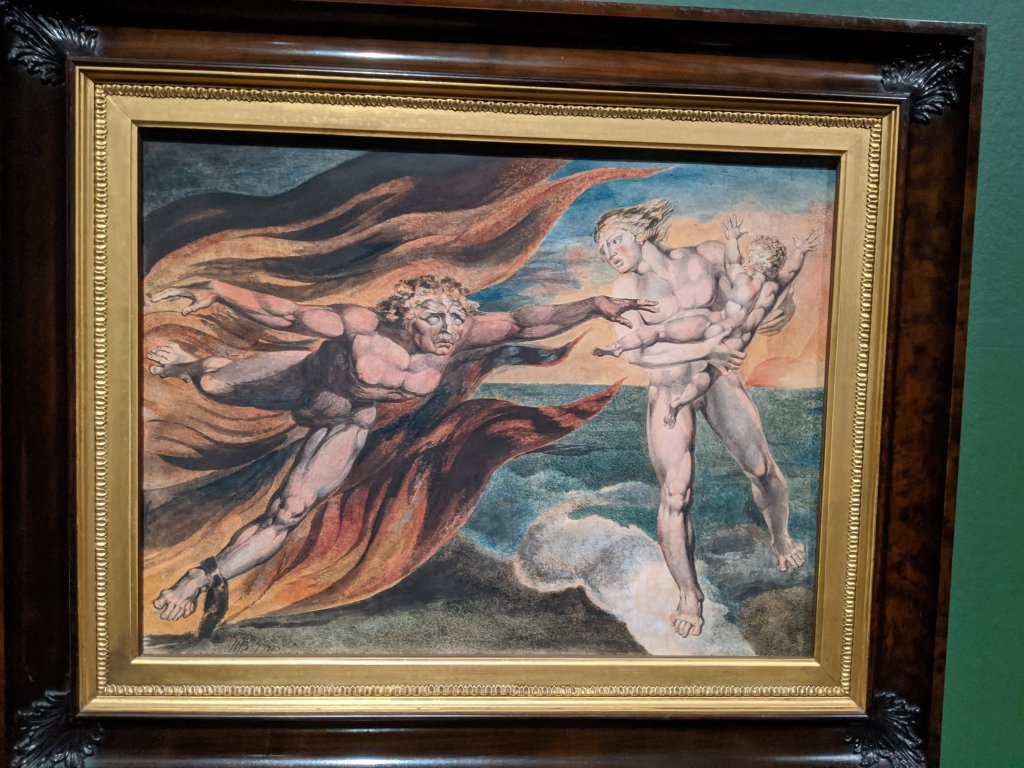
In the combination of story and images, the rich text and the techniques used to add imagery relatively quickly, Blake really can lay claim to being the first graphic novellist (a link the curators were keen to promote with the excellent choice of Neil Gaiman and Alan Moore books in the exhibition shop).
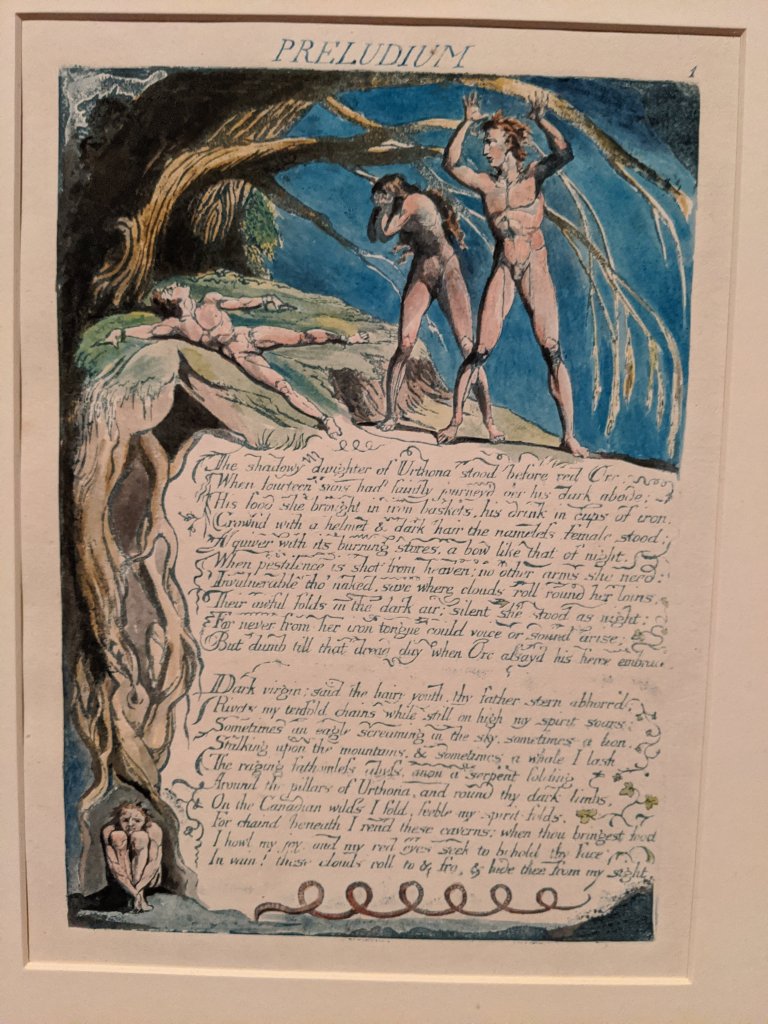
The technology didn’t really exist to combine things like this previously. Blake operated around 1780-1820. Now, in Japan a little earlier, Hokusai, Hiroshige and ukiyo-e depictions became extremely popular in both West and East (interestingly partly due to embracing Western styles of perspective) and apparently influenced the Impressionists – surely also Blake and others too. But Blake seems to have been the first to have embraced the idea of dramatic, artistic imagery simultaneously with rich, often dense, tracts of text to convey the overall story.

 Timsformational